Why Blown-In Insulation Settles and Fails Over Time
If you own a ranch-style home in Allouez or Ashwaubenon, you may have noticed your heating and cooling bills climbing steadily over the years. One of the most common culprits is settled attic insulation. Blown-in fiberglass and cellulose insulation are popular choices for many homeowners because they're affordable and easy to install, but they have a significant drawback: they compress and settle over time.
Gravity, vibration from HVAC systems, and natural moisture fluctuations cause blown-in materials to compact. When this happens, the R-value (thermal resistance) of your insulation drops dramatically. What started as R-38 or R-49 insulation can degrade to R-20 or lower within just 10 to 15 years. This settling is especially problematic in older ranch homes, where attic spaces may already have marginal insulation coverage. The result is increased energy loss through your roof, higher utility bills, and reduced comfort year-round.
Spray Foam vs Blown-In Insulation: A Long-Term Comparison
When comparing Attic Spray Foam Insulation to blown-in materials, the differences become clear when you look beyond the initial installation. Blown-in insulation relies on its depth and density to create an air barrier, but as noted above, it settles. Spray foam, by contrast, expands on application and hardens into a permanent, rigid structure. It doesn't compress, doesn't settle, and maintains its R-value for the life of your home. This permanence is especially valuable in Green Bay, where temperature swings between winter freezes and summer heat create constant stress on building materials.
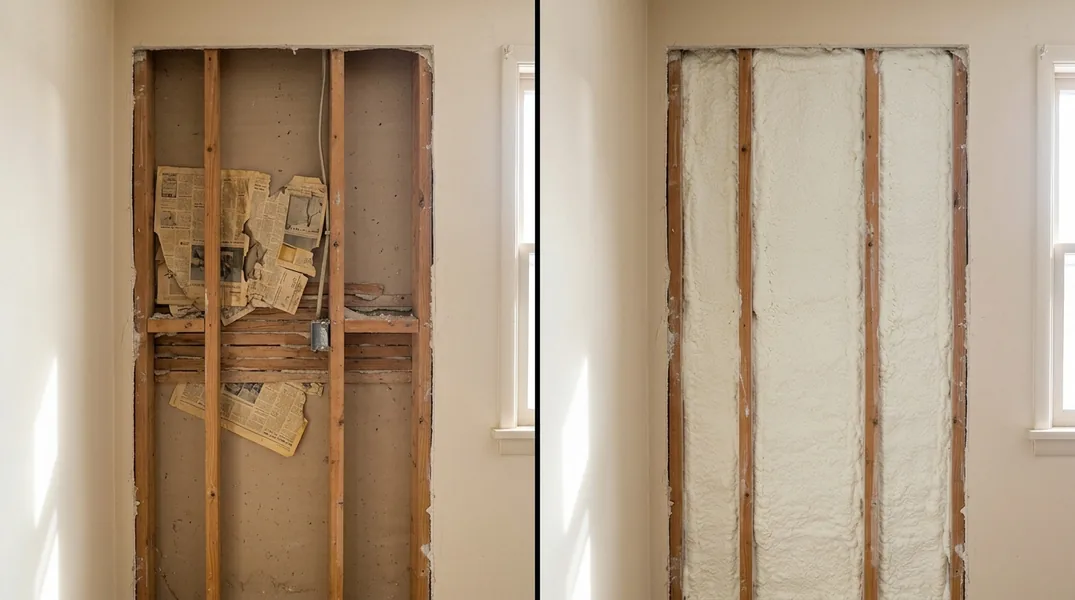
Another critical advantage of spray foam is its air-sealing capability. Blown-in insulation fills cavities but leaves small gaps around pipes, electrical wires, and structural members. Spray foam, however, expands to fill every crevice and adheres to surfaces, creating a complete thermal envelope. This means fewer air leaks, better moisture control, and improved indoor air quality. For homeowners tired of drafty attics and inconsistent temperatures, this difference is transformative.
Spray Foam vs Fiberglass: Why Fiberglass Falls Short in Attics
Fiberglass batts and blown-in fiberglass are among the most common attic insulation types, partly because they've been used for decades and are relatively inexpensive. However, fiberglass has inherent limitations when it comes to performance and longevity. Fiberglass insulation depends on trapped air pockets to provide insulation value, but those air pockets are vulnerable to disturbance. Settling, moisture infiltration, and compression all reduce fiberglass effectiveness over time.
Additionally, fiberglass doesn't create an air seal. Warm air from your home rises and escapes through gaps around fiberglass batts, while cold drafts infiltrate from outside. In the humid Wisconsin climate, this air leakage can also introduce moisture into your attic, leading to mold growth and wood rot. Spray foam eliminates these problems by expanding to fill gaps and curing into a moisture-resistant barrier. If you're comparing insulation options for your ranch home, fiberglass may seem budget-friendly upfront, but spray foam's durability and performance make it the better long-term investment.
Spray Foam vs Cellulose: Moisture and Durability Concerns
Cellulose is an eco-friendly blown-in insulation made from recycled paper fibers. While its environmental credentials appeal to many homeowners, cellulose has significant drawbacks in attic applications. Like fiberglass, cellulose settles over time, losing R-value. More importantly, cellulose is highly susceptible to moisture damage. In Wisconsin's climate, where attics experience seasonal humidity changes and potential roof leaks, cellulose can absorb moisture, leading to mold, mildew, and structural decay. Once cellulose becomes wet, it loses its insulating properties and may need to be replaced entirely.
Closed Cell Spray Foam Insulation outperforms cellulose in moisture-prone environments. Closed-cell foam has a closed-cell structure that resists moisture absorption and actively helps manage humidity in your attic. It also provides superior R-value per inch (approximately R-6 to R-7 per inch compared to cellulose's R-3.5 to R-3.8 per inch), meaning you need less material to achieve better insulation. For attics in Allouez and Ashwaubenon, where moisture from winter snow melt and summer humidity is a real concern, closed-cell spray foam is the more durable choice.
What Is the Best Insulation for Attics? The Case for Spray Foam
After comparing spray foam to fiberglass, cellulose, and blown-in options, it's clear that spray foam emerges as the best insulation for attics in most residential applications. The combination of permanent R-value retention, complete air sealing, moisture resistance, and structural support makes spray foam the superior choice. Unlike blown-in materials that degrade over decades, spray foam maintains its performance indefinitely. Unlike fiberglass and cellulose, which leave gaps and are vulnerable to moisture, spray foam creates a unified thermal barrier that protects your entire attic space.
For homeowners in Green Bay with settled insulation problems, spray foam is also a practical retrofit solution. While blown-in insulation must be completely removed and replaced to address settling issues, spray foam can often be applied directly over existing insulation, adding both R-value and air sealing in one step. This efficiency reduces labor costs and minimizes disruption to your home. If you're ready to move beyond the cycle of declining insulation performance, spray foam is the investment that delivers lasting results.
Attic Spray Foam Insulation Cost in Green Bay: What to Budget
One question that often stops homeowners from upgrading to spray foam is cost. Yes, spray foam typically carries a higher upfront price than blown-in fiberglass or cellulose. However, when you factor in energy savings, durability, and the fact that spray foam won't need replacement for decades, the true cost per year is competitive. Closed-cell spray foam generally costs more than open-cell varieties but offers superior R-value and moisture resistance, making it the preferred choice for attics in humid climates.
The actual pricing depends on your attic size, the type of spray foam, local labor rates, and any existing insulation that needs removal. Rather than guessing, the best approach is to request a free estimate from Green Bay Spray Foam Insulation. Our team can assess your current insulation condition, calculate your home's specific thermal needs, and provide a transparent quote. You may also qualify for energy efficiency rebates or tax credits that offset the initial investment. Call us at (920) 247-2669 to discuss your attic insulation needs and learn how much you could save on heating and cooling costs.
Looking for a professional spray foam insulation contractor in Green Bay? Green Bay Spray Foam Insulation responds fast for all your spray foam insulation needs.
Get a Free Quote